Showing posts with label Fantasy. Show all posts

Thursday, August 8, 2013

Afsha's Review | A Discovery of Witches by Deborah Harkness

It got off to one of the most promising starts I’ve ever read in fantasy literature. But just as the plot’s mystery was about to hit a nail biting crescendo, A Discovery of Witches jumped (of its own volition) into a dark, swirling vortex of ‘Does my jugular look juicy in this?’

It’s no secret that I’m attracted to fantasy and magic. So much so that I will pick up any title with a promise of witchy wonder. I would even ignore my own partner’s review of the same book – ok, I didn’t read it, but that’s only because I couldn’t take my eyes off the title – to give my imagination some exercise.

I devoured the first quarter of the book with such hunger I actually forgot to sleep. I sat up at night making notes about how interesting it is that a contemporary book merges magic, science and academia. I absolutely loved the descriptions of alchemy in the research of our protagonist, a highly decorated historian and non-practicing witch, Diana Bishop. I also didn’t mind Mathew Clairmont, a seriously accomplished scientist and vampire whose current passion -- he’s had many over his lifespan of 1500 years -- is genetics and mutation.

Set in the academic city of Oxford, England the writing is powerful enough to exude the smell of old parchment, rare books and ancient libraries. Our story begins instantly as Diana starts to hear whispers when she calls up Ashmole 782, a manuscript she wants to refer to for a research paper in alchemy. She opens it to discover that it’s actually a palimpsest, a book from which its old text has been washed away, or hidden in this case by magic and covered with new text. All she needs to do is touch its pages and it will reveal to her its secrets. But as one who has turned her back on witchcraft, she tells herself that she isn’t interested. Also, as a historian, it would be sacrilege to touch so old a scroll lest its pages crumble. She sends the book back without further delay but soon realises that it is an elusive scripture bearing the secrets of how and why vampires, witches and daemons exist. The sudden arrival of hoards of creatures in Oxford within close proximity to her serves as an indication that the book is very much sought after. But, as these things go, it is only Diana who can summon the book because turns out it was bewitched centuries ago to stay hidden, and as one who doesn’t (know how to) practice magic, she is clueless as to how she's meant to break the spell.

Enter our vampire love interest Mathew who initially wants the book for his own research on genetics and mutation – specifically, those of the first vampires – and finds himself falling in love with her. In typical vampire style, he takes it upon himself to protect her from other creatures, including fellow witches who are out for blood. She resists, but the frequency at which she is threatened soon convinces her to take his help and eventually fall head over heels in love with him.

The book has the ‘X’ factor which made The Da Vinci Code such a raging success. It has the elements of magic – in an adult capacity of course-- that turned Harry Potter into one of the most beloved fantasy series’ of our generation. It also has poetry in its use of words and back stories that makes certain moments so much more powerful. But most importantly it has magic in its writing as it paints vivid scenes of dark holes with shimmery ghosts and smoke creatures crawling out of bowls.

Where it fails is in its similarities to Twilight and The Vampire Diaries -- not in its adaptation (or lack thereof) of vampire lore but in the nature of the vampire's relationship with the mortal. Harkness spends too much time trying to paint a stupid love story that really could have done with fewer words. At the highest point of its mystery and intrigue, Diana receives a photo of her parents mangled bodies from the time when they were murdered years ago. Next thing we know, she’s been whisked off to Mathew’s castle in Sept Tours, France where they spend what seems like a large portion of the book discovering everything it would seem, except witches.

“You think this one's bad?” Reshma asked me last night. “You should read the sequels in the All Soul's Trilogy.”
“No thank you,” I snapped. "I’d much rather take a stake to the heart."

But seriously, if you dream of the day you will finally find the perfect man to bite your neck, buy A Discovery of Witches from Flipkart here.

Wednesday, November 16, 2011

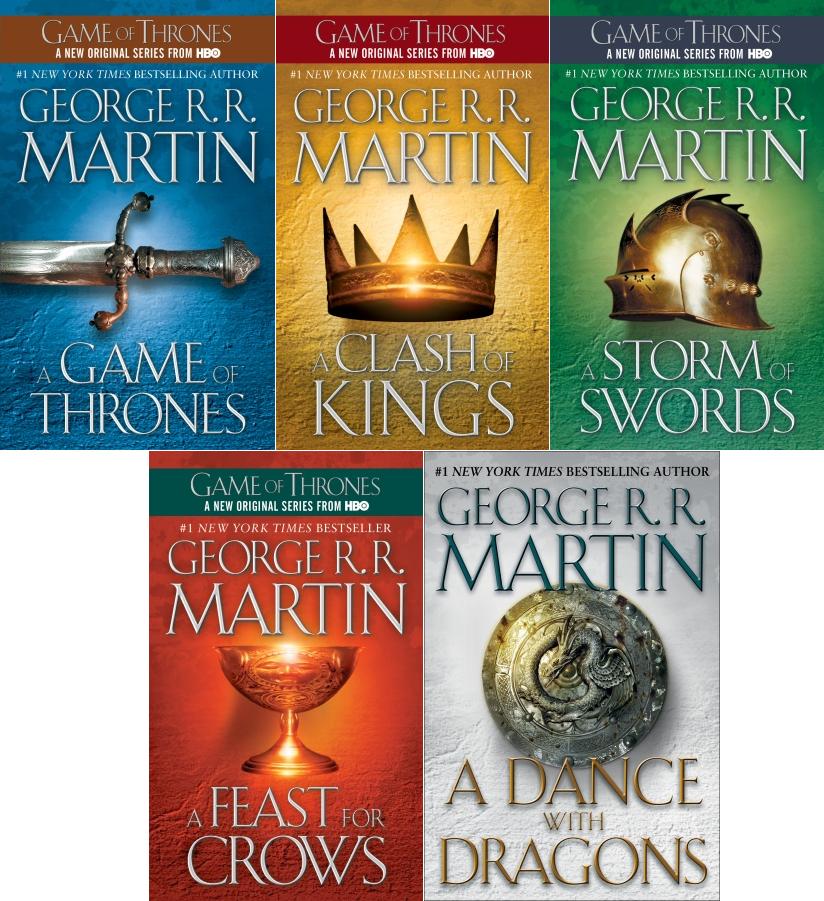
Books that make you go Hmmm... | A Dance with Dragons

I am sad. The book I waited five years to read just finished and what an ending it was. As always Martin hooked me by the navel before it ended but now I am back to waiting.

The reading world is divided into normal readers and fantasy readers. Normal readers walk into book shops or scroll down the NY times list when they want to read find something to read. Fantasy readers have already penned down the release dates of when their favorite book is about to be published. Normal readers read stand alone novels and often let go, daunted by the size or number of volumes that follow. Fantasy book readers believe the bigger the better, the longer, just more to devour. Normal people are wondering, why George R R Martin's  "A Dance with Dragons" reached the No 1 spot in the NY times list. Because normal readers have forgotten Martin and the fact that all his last five books in The Song of Ice and Fire have topped the NY times list. Fantasy enthusiasts have waited five years, sent him love letters which turned to hate letters which resulted in a petition when Martin failed to publish The Dance with Dragons last year after a five year wait. Yes, I signed it. Finally published, Martin began the book with a letter acknowledging the time he had taken and ended it saying, "The last one (A Feast of Crows) was a bitch. This one was three bitches and a bastard." So as you can see the fantasy world is wrought with emotion. So be prepared.

A song of Ice & Fire
Ardent Martin fans have probably already read this book by now since it was published in September 2011, ergo this post will only interest newbies. Aaah...the lucky lucky newbies, so jealous. You have five books to relish and a whole world in front of you. A world of politics, magic, insane sex and fantastic plot lines awaits you.  George R R Martin has been hailed as the American Tolkien but there is much more to this book that fantasy. The characters will haunt you in your sleep. After the fourth book -apart from having possibly lost your job because you are so involved in reading, you might find yourself saying, "That bitch is worse than Cersei" or  "God, I wish I had dragons."

The book is based in Westeros, a land where winter lasts for an eternity and babies meet violent deaths. At the helm you have Robert Baratheon, ruler of the seven kingdoms and his queen, Cersei AKA the devils handmaiden. You have houses great and small and they are all vying for that elusive Iron throne. At the heart of it all is the family of The Starks at Winterfell. You see the world through many characters, but it's primarily through the eyes of the Stark children, five real ones and a bastard that are gifted direwolves. A poignant start. The Starks live a happy cold life until one day Robert waltzes into Winterfell and sets everything in motion. As you continue reading the series, Martin introduces you to worlds beyond Westeros and magic-always hving been only part of the Chorus line, begins to take center stage. The thing about Martin is that you want to take a voodoo doll to him sometimes since he kills people off without batting an eyelid, sometimes people you love. Often seems like it's only people you love. If you want to believe in Santa Claus, this book is not for you. His rationale is that it is unrealistic that only the people you hate die in a war. Everyone dies, sometimes the good die too. And because of that you're so emotionally committed that you sit there willing them to live. You find yourself saying, please don't take her away. I am yet to meet a writer as ruthless as Martin.
Jon Snow - makes my heart go boom boom

So newbie, if you're thinking "God she's is taking this personally", you are forgiven for being a normal reader. But that's ok. We like converting people. A true believer understands the sentiment, but you cannot call yourself a lover of fantasy if you have not read these books, so get cracking if you want to redeem yourself. Buy all the five books, sit in a corner and let Tyrion get into your head. While The Game of Thrones goes by like a breeze the sequels vary in action and have to be read patiently while you give up your job and sit in a corner. The Feast of Crows for instance will annoy you at times and reads like a historical novel. In reality, its a scene setting before A Dance with Dragons gets into action.

Even my fantasy hating fiance lapped it up like bowl of home made Sheera. But I have to say this, he couldn't continue. We win some, we lose others. All that matters is that you win more than you lose. This is a novel where the devil has his say and often even wins a few battles. Here's hoping he doesn't win the war but honestly with Martin, you never know.
George R R Martin

And now I  patiently wait for The Winds of Winter .

Want all five? Buy A Game Of Thrones 5-Book Boxed Set from Flipkart.com

Just a taster? Buy A Game Of Thrones from Flipkart.com

Friday, October 21, 2011

A fairy tale for adults | The Night Circus by Erin Morgenstern

A dreamer is one who can only find his way by moonlight, and his punishment is that he sees the dawn before the rest of the world. – Oscar Wilde, 1888

I’ve been to dark places these past few weeks and enjoyed it immensely. First, I stepped into an unnamed city with The Book of Dead Days by Marcus Sedgwick (click here for review) and then I travelled with The Night Circus by Erin Morgenstern which I shall talk about now.

You see, when The Guardian long-listed Morgenstern as one of the best debut authors early in September, her book hadn’t even been published. But the article did feature an extract, which was quite unnecessary because it had my attention the minute I laid eyes on the cover. Black, white with a bit of red thrown in, I knew instantly that this was a book I'd adore. The extract didn’t do anything to deter my resolve to posses it, so on September 13, I ordered the Kindle version off Amazon.

Set at the turn of the 18th Century, the the story features Celia and Marco, two magicians who are groomed to enter a battle of skills when they grow up. Bound to the game, and more importantly, to each other, Le Cirque des Rêve, the travelling circus that’s only open at night, is their battlefield. With brilliant mastery, the duo showcase their skills by creating sections such as a garden made entirely of ice, a room of clouds you can actually jump off and a lair of bottled memories. But that’s just the fun stuff. The majority of their powers are utilised to keep the circus and its members safe from peril, travel across continents with quick ease and for some strange reason, keep everyone involved from aging. So you see, the circus is no ordinary place and it isn't just Celia and Marco who are bound to the fate of the game. That is why the two begin to tire of their roles, longing to be together instead. But as with all fairy tales that have been woven in dark, magical surroundings, finding a happily-ever-after ending is a lot more complicated than it seems.

So the question is – is it a young adult novel? Hell to the no! Should you read it? Yes, absolutely! The Night Circus is a brilliant first attempt by the author. Her prose is filled with imagination, detail and colour (even though there is little mention of any). The structure, divided into five parts, oscillates between the late 1800s and the first decade of the 1900s. The ride can get a bit woozy because the spacetime continuum, works very well in the first half of the book but starts getting confusing to the point of annoyance in the second half. Sure, there’s enough mystery to keep you hooked and plenty of introductions to characters you know will turn out to be very interesting as the plot progresses. But alas, somewhere after the halfway mark, Morgenstern’s storytelling skills begin to droop and drag. There’s only so much one can marvel at the beauty of the black and white circus that’s almost like an amusement park, mysterious characters who have hidden secrets and a bonfire that isn't just keeping patrons warm.

Morgenstern's evidently too fresh to create any lasting trends or ComicCon-worthy characters with The Night Circus. But it’s just her first novel and going by that – she ought to, no, deserves to be, on every fantasy fiction aficionado’s radar.

Verdict: If you begin reading the book, you will also finish it. So I recommend you buy The Night Circus from Flipkart.com

Wednesday, September 28, 2011

Book Review | The Book of Dead Days by Marcus Sedgwick

Night time, dark, quiet and filled with mystery, is a great time to read about digging around in graveyards. But that depends entirely on what you like reading and how much you adore books with unfinished endings.

This one features Valerian, a stage magician at the Grand Theatre, who must find a book, The Book of Dead Days, before his Faustian pact with a demonic force is up. And he must do this before the clock strikes midnight on December 31, the last of the Dead Days which are said to be the days between Christmas and New Years.

He needs the name of a grave where it might be buried, but has no leads except for a music box procured from a thug called Green. But he isn’t about to go tomb hunting by himself. He has Boy, an ill treated assistant who “fell from the sky” and Willow, a clever girl with a lot of nerve. Together, they venture into graveyards, churches and underground canals in search of the fabled book that hasn’t been seen in centuries.

The fact that all the action in the book takes place between the hours between midnight and sunrise adds to its charm. The desperation of the situation also builds up every time Boy and Willow, poor mistreated minions, complain about freezing because their clothes just aren’t warm enough. You can actually feel the chill in your bones during a scene where they get on a small horse-drawn cart, usually reserved for shuttling rations between the City and the village on the outskirts.

The Book of  Dead Days by Marcus Sedgwick isn’t about demons and scary ghouls. It’s about those trying to escape dark forces after proactively calling them forth. Valerian, a once-brilliant academician and scientist, took his passion for knowledge to the next level when he began to experiment with arts that others daren’t touch for fear of the consequences. It thus lands him with a bit of supernatural power, enough to make a living as a magician, but not enough to buy happiness or evade money lenders.

Boy, yes, that is actually his name, is a 15-year-old who can’t remember much of his life before Valerian found him, save for a few memories of thieving to survive. He’s also got the knack of fitting into small, cramped spaces and has no beef with the darkness, which comes in handy at several points during the book. But most of the time, you either want to wrap him in blanket or knock him over the head for letting Valerian push him around.

Willow as a character is warmer, stronger and in shot – Boy’s antithesis. She pushes Valerian for answers when Boy doesn’t have the spine to do much except follow Valerian like a lost puppy. She also asks to be fed when she’s hungry because if the self-consumed Valerian doesn’t feel the need to eat, he shouldn’t assume others feel the same. This isn’t to say that her approach gets any results. But it’s nice to have her on Boy’s side.

Sedgwick has written a novel that features a simple plot line and highlights a theory that’s both fascinating and doesn’t unnecessarily complicate. The reader stays interested because the book short and amply spaced with new nuggets of information that add to the mystery in each of the sections – aptly counting down to the Dead Days.

But even though the book falls in the Young Adult category, I wouldn’t be too strict about it. Reading fantastical novels is definitely in the ream of a child, but for adults, they work wonders when you start to lack imagination. As we get older, we either forget about or dismiss myths, magic and folklore for having no basis in reality. But that’s the thing about imaginations isn’t it? Everything within its realms is neither possible nor impossible. The Book of Dead Days nudges you towards this thought process with zest.

The Book of Dead Days is The Caterpillar Book Club’s read for October. Read it with us!
Buy Book Of Dead Days, The (HEINEMANN) from Flipkart.comThe sequel, The Dark Flight Down is also available.

Saturday, July 23, 2011

The Blind Watchmaker

(For all the lovers of fantasy and Sci-fi fiction)

A blind watchmaker sits at the seam

Weaving time from every dream

Making sure that seconds do not go to waste

as every clock is running out of steam.

The wheels of time are turning around

The monks wail that things are upside down

Because the sweeper has got a golden eye

And time stops when the sweeper dies.

And when time stops the world it weeps

Because sadness of death, it starts to creep

Life is slow dying, it’s a matter of time

When time starts dying, so will mankind.

So to save all mankind, the blind watchmaker wakes

Sitting at the seams of time, he takes

Every wasted second from every dream

Until every clock gets back its steam.

Reshma Krishnan

“life is slow dying” - borrowed from “nothing to be said” by Philip Larkin.

Saturday, July 9, 2011

Mythology: Taking the easy way out


Gods, goddesses, mortals and minions. Nothing gets the rusty wheels of imagination rolling better than mystery, magic and copious amounts of celestial fornication from defunct civilizations older than in all the people in this world put together.

I love mythology and always have, which is why I've been guilty of devouring Rick Riordian's Percy Jackson and The Olympians series. You see, I find it quite boring to read reference books dedicated to the subject because the vast amounts of information always overshadow any semblance of the writers' story-telling skills. Plus, Zeus always gets to hog the limelight, making it seem like all Poseidon does is chill out with talking crabs who sing Under The Sea. Ok, so I haven't read that many reference books (or the Iliad, for that mater). But since I discovered Percy Jackson, I haven't had to.

I'm never going to be an expert on the subject. But thank's to Riordian, I can still indulge in conversations centered around the subject. What I love about this man's writing is the way he uses imagination and contemporary characters (who just so happen to be demi-gods) to tell us about Greek and subsequently, Roman mythology.

What's more is that he's doing it again - only this time we move away from Greece and enter the realms of Egyptian mythology. This is a bit trickier because even though we've learned about the civilization's history from our textbooks, Egyptian mythology and it's part human, part animal gods like Horus and Set have somehow fallen in the grey area.

I can't say that The Red Pyramid, the first of The Kane Chronicles, packs a punch as effectively as the The Olympians, but it does have the formulaic chases, disappearing parents and evil gods from forgotten dimensions threatening to create chaos. The usual.

Regardless, 100 pages in and I'm still fully hooked from Bandra and Churchgate. I just hope, for Carter and Sadie's sake, that the book doesn't end up being a cheesy, colossal disappointment.

LinkWithin

Related Posts Plugin for WordPress, Blogger...